E-Bikes In The COTA Trail Network
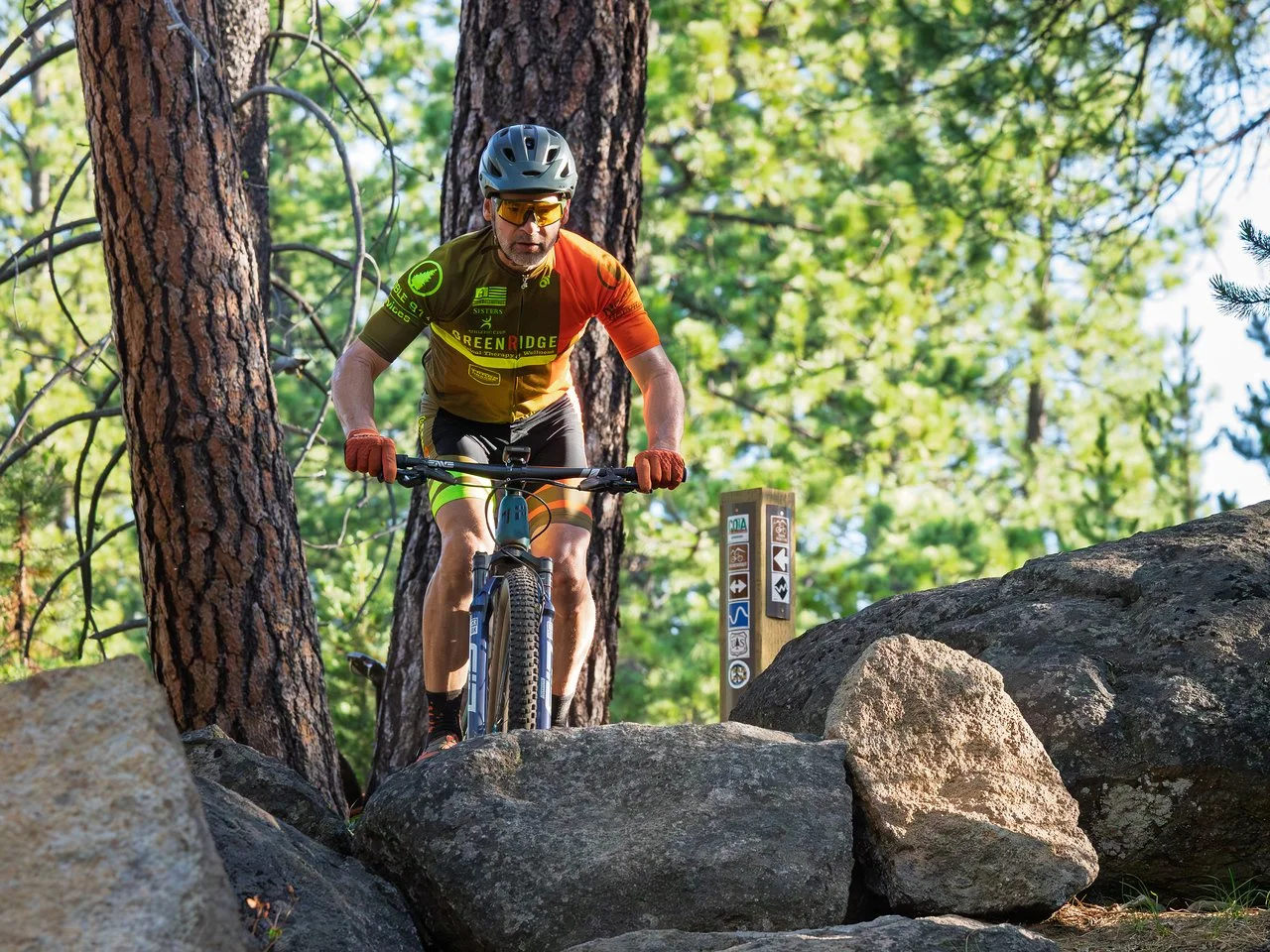
Of the nearly 600 miles of singletrack maintained by COTA, about 320 miles of trails are in the Deschutes National Forest (DNF). As of December 2025, it is now allowed to use Class 1 pedal-assist e-bikes on 161 miles of those trails.
The Forest Service regulates which types of bikes are allowed on select trails as part of their travel management policies. Their decision comes after years of analysis, community input, and research on this specific topic.
COTA is the trail steward for the singletrack trails and does not make rules concerning e-bikes but we do support this decision and will support its implementation. This page is designed to help our community understand more about e-bikes on the trails and answer common questions.
What is COTA’s position on this?
We support the Forest Service’s proposal to allow Class 1 pedal-assist e-bikes as outlined. Other classes of e-bikes or e-devices (with the exception of adaptive bikes) remain explicitly disallowed.
We read all the available literature and contacted other trail alliances that have transitioned to allowing Class 1 pedal-assist e-bikes to learn from their experience. We learned that other areas allowing Class 1 e-bikes have not experienced noticeable extra trail wear or increased rider conflicts.
This has also been our experience locally at Madras East Hills and the Redmond Radlands, two systems that COTA maintains that have been open to Class 1 e-bikes for years. We have found that maintenance needs are similar to other systems and no rider conflicts have been reported.
In formulating our position, we also engaged with many COTA members and people in our community through a series of meetings and listening sessions in 2022 and 2023. We found that there are numerous people of all ages for whom Class 1 pedal-assist e-bike access will make the difference between them being able to ride trails with their friends and family or not.
Two of COTA's top priorities have long been sharing the joy of mountain biking with anyone who wants to try it and offering a diversity of riding experiences. These priorities, combined with research and community engagement, have led us to support allowing Class 1 pedal-assist e-bikes on select trails.
Why Class 1 pedal-assist e-bikes?
The DNF proposal only allows class 1 pedal-assist e-bikes and COTA agrees with this.
In doing our research, we’ve learned a lot about the class system and want to share that with you.
Classes 2 and 3 have either higher power, a throttle (i.e., not pedal assist), and/or bigger batteries. They're designed to go farther and faster than class 1 e-bikes. COTA believes that class 2 and 3 e-bikes are not compatible with trails that are predominantly used by non-motorized uses such as traditional mountain bikes and foot traffic. The Forest Service does not allow class 2 and 3 e-bikes on the trails and COTA supports this. Note that adaptive bikes fall outside of these classifications and are allowed by the Forest Service and supported by COTA.
Class 1 is different from the other classes because its intent is to assist humans, but within the bounds of normal human performance. It does this in two ways: 1) by only operating when the human pedals, and 2) by keeping the power assistance to a reasonable level. At maximum assistance (which also means maximum effort of the human), an amateur rider could ride at expert levels (or just exceed them). If humans have a range of power, class 1 is designed to be inside that range.
Class 1 pedal-assist e-mountain bikes also function similarly to regular mountain bikes. They have capable suspension, gearing, brakes, and tires. Those attributes matter because we design our trails for these types of bikes and inside of the range of human performance. Drawing the line at Class 1 makes the most sense to us because it aligns with how the trails currently work.
What about speed?
Most use the assist to moderate their effort, not increase their speed.
When riding a Class 1 pedal-assist e-bike, it is possible to go somewhat faster on average on flat or uphill terrain. Class 1 bikes don't enable a rider to exceed the speed of a very fast athlete on a regular bike. When a rider goes downhill and coasts, no power is deployed.
Class 1 pedal-assist e-bikes max out at 750 watts which is approximately 1 horsepower. The rider can decide how much power assistance to use, and the maximum power only works if you pedal at max effort. Because of the batteries, Class 1 pedal-assist e-bikes are heavier, so it's common for riders to use assist on flat or uphill terrain. Typically, the power is used to extend the ride another hour or two, or make it easier to climb -- not just to go faster. The curviness of the trail and the rider’s technical skill also serve to limit their speed.
Other trail systems who have transitioned to allowing Class 1 pedal-assist e-bikes did see an average increase in speed, but it wasn't outside the range of human performance. The Tahoe National Forest, which did an extensive study of these bikes, cited an uphill range of 5-8 mph for regular bikes and 8-13 mph for Class 1 e-bikes.
Who else has done this?
Several areas in Oregon and beyond have opened trails to Class 1 pedal assist e-bikes with no significant issues. In particular, there are Forest Service areas across the US who have implemented similar rule changes.
We encourage you to read about these projects, especially the Tahoe experience because of how similar their terrain and rider community are to ours.
Forest Service areas:
Tahoe National Forest - a big pilot project occurred a few years ago and it was found that class 1 e-bikes did not impact the trails. Since then, class 1 e-bikes have been allowed on miles of trails with plans for more coming. (View project page)
Jakes Rocks - the local US Forest Service approved class 1 e-bike usage and found no significant impact to trails, safety, or riders.
Fruita, Colorado - trails on BLM property opened to class 1 e-bikes, with more planned.
Jackson, WY - trails in the Bridger-Teton National Forest considering class 1 e-bikes.
Other areas in Oregon and Washington:
Black Rock Mountain Bike Area: Oregon Dept of Forestry
Post Canyon: Hood River County
Spence Mountain: Klamath County
Evergreen Mountain Bike Alliance in Washington: Over 30 destinations supported by various land owners, county, state, and private.
Common quick questions:
What types of bikes will be allowed? The proposal is to allow Class 1 pedal-assist e-bike only. Other e-bikes/e-devices are disallowed (adaptive MTBs not affected).
When would changes occur? The rule change is effective now (Dec 2025) but there is a wildlife closure in effect through March of 2026.
How many trials would be affected and where? 161 miles of trails in parts of Phil's (west of Bend), Peterson Ridge (outside of Sisters), and the Wanoga and Sunriver areas.
(See the table at the bottom of this page for the full list of trails)
What is COTA’s role in this?
The Forest Service is severely understaffed and underbudgeted, which is why they partner with COTA to maintain the trails.
Because this is now an approved policy, COTA will work with the Forest Service to implement the changes needed to enact this policy. COTA will work to ensure the trails signs are updated, do rider & bike shop education, and do any other updates needed to the trails. Note, these changes will not happen overnight, but we expect that all changes will be done in 2026.
In sum, COTA will:
Update trailhead and on-trail signage.
Implement rider education and etiquette campaigns so people know the rules and ride respectfully. In particular, we will partner with local bike shops and other organizations to spread the news and educate new or visiting riders.
Look over trail design to see if there's areas to improve in terms of sight lines or traffic patterns. Sight lines help riders moving in opposite directions see each other with enough time to react to oncoming traffic.
Actively welcome and recruit members of the e-MTB community to participate in volunteer events.
Please consider joining our efforts! COTA is a volunteer organization and these things take time and money. Even if you don't support Class 1 pedal-assist e-bikes on the trails, a strong trail organization is the best way to ensure the trails are maintained to high standards and that changes can benefit everyone.
Frequently Asked Questions
-
The Tahoe National Forest study is probably the most appropriate data point for this and it found no material trail impact from Class 1 pedal-assist e-bike usage compared to other bikes.
We believe Class 1 pedal-assist bikes are substantially similar to regular mountain bikes and won't cause more damage other than normal trail wear.
To put it in perspective, Central Oregon’s population has exploded over the last 20 years. Just in Deschutes County the population was 115,000 in 2000 and was 200,000 in 2020. If you assume that 10% of the population mountain bikes then there are about 20,000 active riders in Deschutes County alone. COTA sees trail wear from the increase of population over time and we don't think that class 1 pedal-assist e-bikers will represent a similar massive increase in riders. -
We don't believe so, although everyone's experience is unique. Class 1 pedal-assist e-bikes are not unnaturally loud (and quieter than squeaky brakes!), and often a Class 1 pedal-assist e-bike looks very similar to a regular bike. COTA runs etiquette campaigns often and they apply to all riders, and that will stay the same going forward. An e-biker on a Class 1 pedal-assist bike might be as fast as a strong athlete - in both cases, they need to be aware of that and respect other riders.
-
Nearly all of the rules on Forest Service land rely on the honor system. The government does not fund trail police to make sure rules are followed and COTA would never want to see this. For decades, the mountain biking community has done great work in self-policing and can be trusted to be great trail citizens. Further, the Forest Service trusts COTA and its volunteers to show up for work events and to be great stewards of the land. Community involvement reassures the Forest Service that we care about the rules, the quality of the trails, and the overall experience.
We have not heard reports of rule violations or bad behavior in the other areas of COTA's network where Class 1 pedal-assist e-bikes are allowed: the Redmond Radlands and the Madras East Hills. Those two locations are public lands owned by the city and the owners decided that Class 1 pedal-assist e-bikes were allowed. Similarly, the Tahoe National Forest has not reported problems along these lines over the last few years.It is up to each e-bike rider to know the class designation of their bike and to honor the rules.
-
We don't believe so, for a couple of reasons. First - we do see an important distinction between Class 1 pedal-assist e-bikes and other classes and that is human performance. There is no other class beyond Class 1 that matches what a human can do, so in those terms we are at the limit (ie, there is no next step). We do not support going faster than a human could on a normal bike and we do not support bigger, heavier bikes on the trails. Second, trails are designed with these constrains in mind. Motorcycles, ATVs, or even cars have no business on the singletrack trails and would have a miserable experience doing so. There are plenty of other options available for other types of bikes or vehicles.
Adaptive mountain bikes (aMTBs) are classified differently by the Forest Service and nothing would change with respect to their access. -
The Forest Service balances a number of priorities and one of them is wildlife. There is a blanket winter-time closure for motorized vehicles in the forest from December 1st through March 31st. Despite the rule change to allow Class 1 pedal-assist e-bikes, the Forest Service still technically considers them motorized vehicles. As such, their use is prohibited in that time zone. It is unlikely much mountain biking will be available at this time anyway, given the Central Oregon weather.

Class 1 pedal-assist e-bikes OK (class 2 and 3 disallowed):
Phil’s Area up to Lower Whoops Area
Ben’s Trail
COD
ELV
EXT
Expressway
Grand Slam
KGB
Kent’s Trail
The Lair
MTB
Marvin’s Garden
Phil’s Trail
Rimrock Paved Trail
Ticket to Ride
Voodoo & Voodoo Child
Whoops (Lower Only)
Wanoga Area and Tyler’s Trailhead Area
Afternoon Delight
Catch and Release
Chain Reaction
Duodenum
Dynah Mo Humm
Funner
Kiwa Butte
Lone Wolf
Royal Flush
Steve Larson’s
Storm King
Tiddlywinks
Tyler’s Traverse
Sunriver Area
Afternoon Delight
Chain Reaction
Elko Point
Roundabout
Sun Lava Trail
Swan Song
Sisters Area
Elk Ranch
Elk Rock Loop
Peterson Ridge East, Middle, and West Trails
Top Run Connector
Any E-bike or E-device NOT allowed:
Trails out of Dutchman sno-park
Flagline (All Segments)
Metolius Windigo
Ridge Loop
Trails out of Skyliners Trailhead / Swampy
Farewell
Mrazek
North Fork
SST
Sector 16
South Fork
Swamp Thing
Swampy Lakes
Swede Ridge
Tumalo Creek
Tumalo Ridge
Vista Butte
Whoops (Upper)
New Wanoga Trails (The original NEPA assessment was done before these trails existed and will remain as “no e-bikes allowed” until further notice).
Fifty Shades of Blue
Lorax Climbing Trail
New DH Trails (under construction)
Pondo
Mt Bachelor Zone
Edison Lava
Cultus Lake Trails